
Modern desserts have moved far beyond the classic cake and pie, embracing scientific techniques, unexpected flavor pairings, and playful presentations. Whether you’re a home baker curious about molecular gastronomy or a seasoned pastry chef looking to add a twist to your menu, this guide walks you through the most exciting sweet experiments you can try in a typical kitchen. Each section breaks down the concept, supplies a step‑by‑step method, and offers practical tips to help you achieve consistent, Instagram‑worthy results.
1. The Magic of Spherification: Fruit Caviar
Spherification turns liquids into delicate, jelly‑like beads that burst with flavor. It’s perfect for creating “caviar” from fruit juices, syrups, or even cocktail mixes.
Ingredients & Tools
- Fruit juice or flavored syrup (150 ml)
- 2 g sodium alginate
- 500 ml distilled water
- 5 g calcium lactate
- Immersion blender
- Fine mesh strainer
- Syringe or small spoon
Step‑by‑Step Process
- Prepare the alginate bath. Dissolve 2 g sodium alginate in 500 ml distilled water using an immersion blender. Let it rest for 15 minutes to eliminate air bubbles.
- Mix the fruit base. Blend the juice with 5 g calcium lactate until fully dissolved. Strain through a fine mesh to ensure a smooth texture.
- Form the spheres. Using a syringe, gently drop the juice mixture into the alginate bath. The droplets will instantly form a thin gel membrane.
- Rinse and serve. After 1–2 minutes, scoop the spheres with a slotted spoon and rinse them in a bowl of clean water. Pat dry and arrange on a dessert plate.
Tips for Success
- Use cold, filtered water for the alginate bath to prevent premature gelling.
- Adjust calcium lactate concentration if the spheres are too firm (reduce) or too soft (increase).
- Work quickly—once the juice contacts the bath, the gel forms within seconds.
2. Nitro‑Frozen Fruit Sorbet: A Flash‑Freeze Experience
Liquid nitrogen creates a silky, ultra‑smooth sorbet in seconds, preserving fresh fruit flavors and giving a dramatic smoky presentation.
Ingredients & Tools
- Fresh fruit puree (250 ml)
- 50 ml simple syrup
- 1 tsp lemon juice
- Liquid nitrogen (≈200 ml, handle with gloves)
- Stainless steel bowl
- Wooden spoon
Step‑by‑Step Process
- Blend the base. Combine fruit puree, simple syrup, and lemon juice in a bowl. Taste and adjust sweetness.
- Cool the mixture. Refrigerate for 10 minutes to lower the temperature, which helps the nitrogen work more efficiently.
- Freeze with nitrogen. Wearing gloves, slowly pour liquid nitrogen into the bowl while stirring constantly. The mixture will freeze instantly, forming a fluffy sorbet texture.
- Serve immediately. Scoop the sorbet into chilled glasses. The residual nitrogen will vaporize, creating a captivating mist.
Practical Advice
- Never inhale nitrogen vapors; work in a well‑ventilated area.
- Stir continuously to avoid large ice crystals and ensure an even texture.
- For a smoother finish, add a splash of vodka or another high‑proof spirit; it lowers the freezing point.
3. Edible Flower Petal Crumble: Texture Meets Aroma
Incorporating edible flowers into a buttery crumble adds a subtle floral note and a beautiful visual contrast.
Ingredients & Tools
- 1 cup all‑purpose flour
- ½ cup rolled oats
- ¼ cup powdered sugar
- ¼ cup cold unsalted butter, cubed
- 2 tbsp dried edible flower petals (e.g., lavender, rose, hibiscus)
- Mixing bowl, pastry cutter or fork
Step‑by‑Step Process
- Combine dry ingredients. Whisk flour, oats, powdered sugar, and flower petals together.
- Incorporate butter. Using a pastry cutter, rub the cold butter into the dry mix until the texture resembles coarse crumbs.
- Chill. Cover the bowl with plastic wrap and refrigerate for 15 minutes to firm the butter.
- Bake. Spread the crumble evenly on a parchment‑lined tray and bake at 175 °C (350 °F) for 12‑15 minutes, or until golden.
- Finish. Let cool, then sprinkle over fruit tarts, yogurt parfaits, or ice cream.
Actionable Tips
- Keep butter cold; warm butter will melt and produce a soggy crumble.
- Adjust the amount of flower petals based on potency—lavender can be overpowering if overused.
- For extra crunch, toast the oats lightly before mixing.
4. Deconstructed Layered Parfait: Visual Storytelling
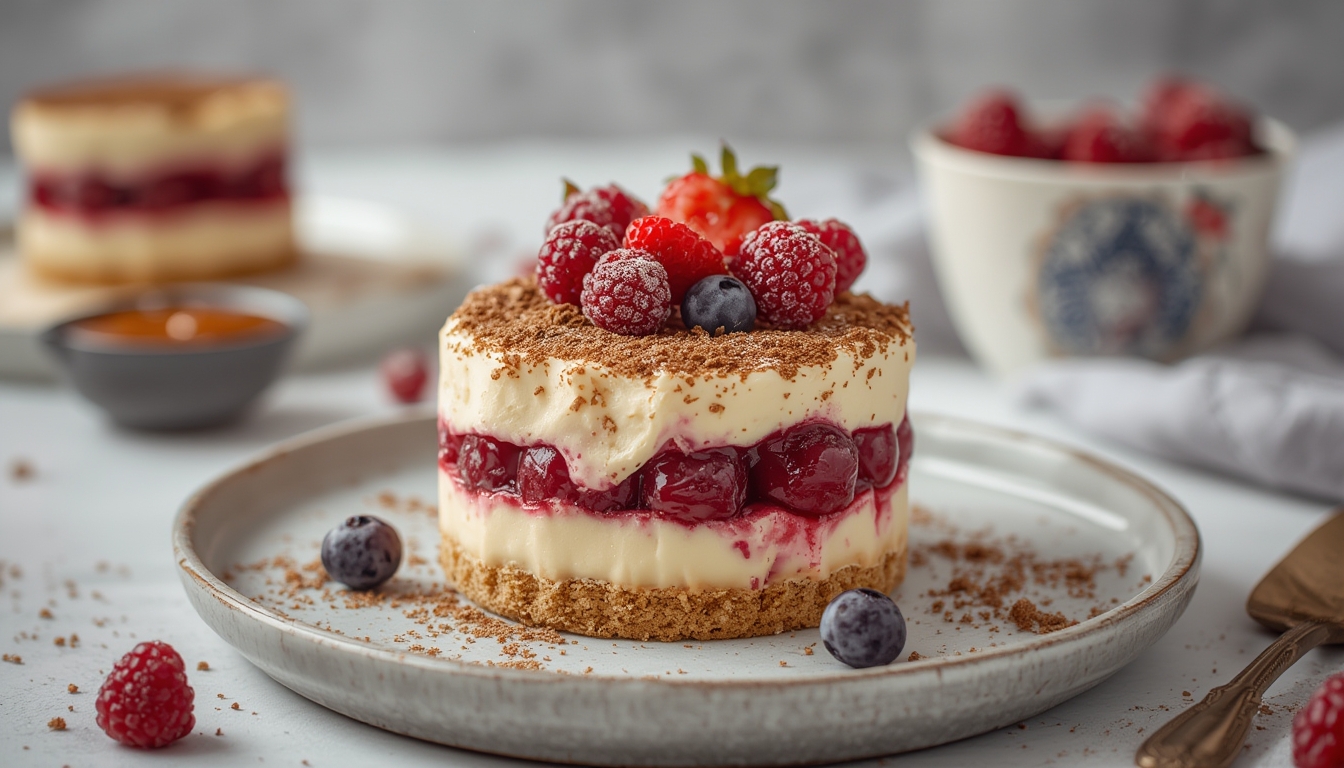
Layering textures and flavors in a clear glass creates a dessert that’s as much a visual narrative as it is a taste experience.
Core Components
- Base: Crushed shortbread cookies (½ cup)
- Middle: Whipped mascarpone with vanilla (1 cup)
- Top: Fresh berries, caramel drizzle, and toasted nuts
Assembly Steps
- Prepare the base. Mix crushed shortbread with a drizzle of melted butter; press into the bottom of a glass.
- Whip the mascarpone. Combine mascarpone, 2 tbsp powdered sugar, and ½ tsp vanilla extract. Fold in lightly beaten cream for airy texture.
- Layer. Spoon a generous layer of mascarpone over the cookie base. Add a thin layer of fresh berries.
- Repeat. Add a second cookie layer, more mascarpone, and finish with berries, a caramel swirl, and a sprinkle of toasted nuts.
- Serve. Present immediately to preserve the contrast between crunchy and creamy.
Key Pointers
- Use clear glasses to showcase each layer; a 6‑oz ramekin works well.
- Keep the mascarpone mixture chilled until assembly to prevent it from melting.
- For a flavor boost, fold a pinch of sea salt into the caramel drizzle.
5. Sweet Smoke Infusion: Aromatic Garnish
Smoking desserts adds an unexpected depth. A quick tabletop smoker can impart flavors like rosemary, tea, or even coffee to a finished sweet.
Materials Needed
- Tabletop smoking gun
- Wood chips or tea leaves (e.g., hickory, lapsang souchong)
- Covering dome or large glass bowl
- Prepared dessert (e.g., panna cotta, mousse)
Procedure
- Set up the smoker. Load the chosen wood chips or tea leaves into the smoking gun.
- Position the dome. Place the dome over the dessert to trap the smoke.
- Introduce smoke. Activate the gun and direct the smoke under the dome for 10‑15 seconds.
- Seal and wait. Close the dome tightly and let the dessert absorb the aroma for 1‑2 minutes.
- Serve. Remove the dome dramatically at the table for a sensory reveal.
Best Practices
- Use light, aromatic woods for delicate desserts; stronger woods pair well with chocolate or caramel.
- Do not over‑smoke—excess can mask the dessert’s natural flavors.
- Experiment with flavored teas for a subtler, nuanced scent.
By integrating these modern techniques—spherification, flash‑freezing, floral crumbles, deconstructed parfaits, and smoke infusion—you’ll transform ordinary sweets into conversation‑starting experiences. Each experiment is designed to be reproducible with everyday kitchen tools, yet flexible enough for creative twists. Dive in, document your results, and let the data from each trial guide your next sweet innovation.