
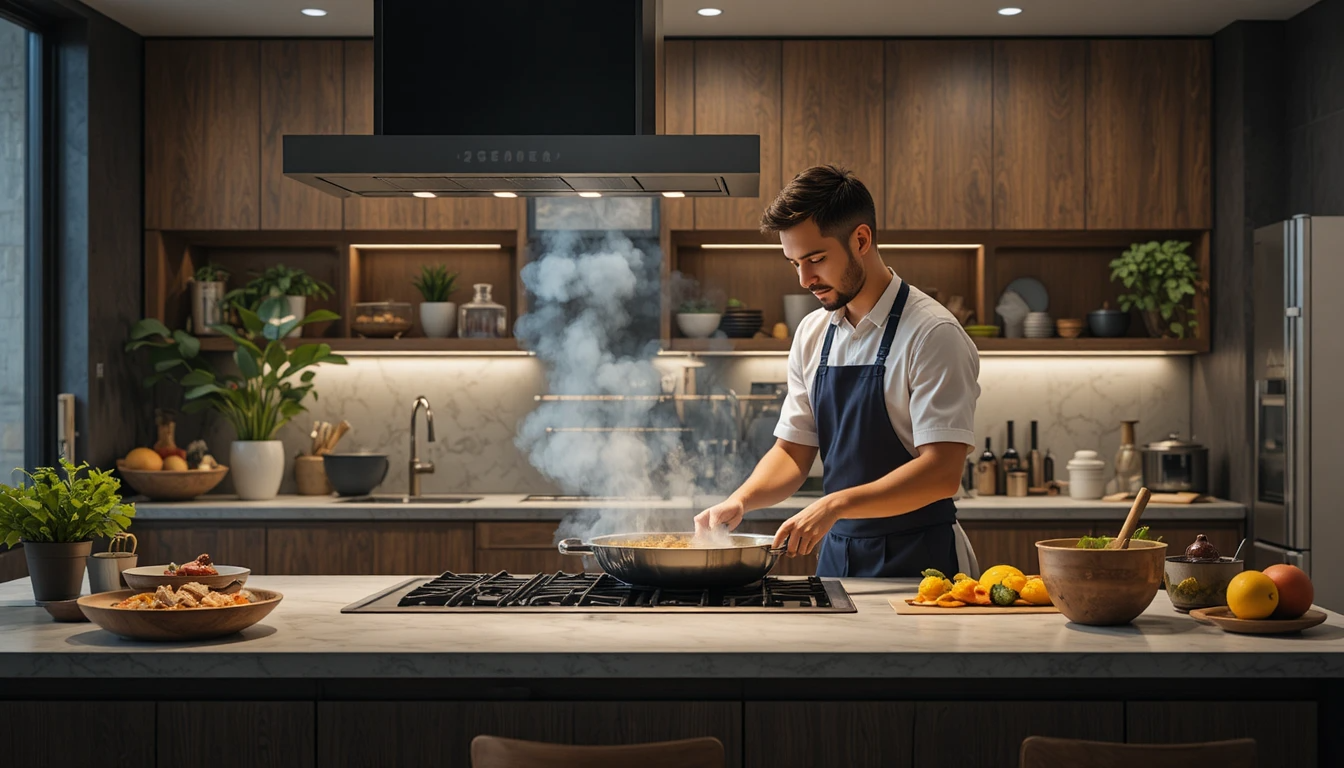
In an age of constant digital distraction and hurried consumption, a quiet revolution is unfolding in home kitchens worldwide. This movement transcends cooking techniques or ingredient trends—it’s about cultivating what neuroscientists and contemplative practitioners are calling “culinary consciousness”: a state of present-moment awareness applied to the entire process of nourishing ourselves and others. This approach to cooking and eating represents a powerful convergence of ancient mindfulness traditions with modern neuroscience, creating practices that transform not just what we eat but how we eat, why we eat, and who we become through the process.
The rise of culinary consciousness responds to what psychologist Mihaly Csikszentmihalyi identified as the modern “experience gap“—the disconnect between the volume of stimuli we encounter and the depth of attention we bring to them. While we’ve never had more access to food information, recipes, and cooking content, we’ve also never been more disconnected from the actual experience of preparing and consuming food. Culinary consciousness bridges this gap by applying principles of mindfulness—nonjudgmental present-moment awareness—to every aspect of our food journey, from selection to preparation to consumption to cleanup. This article explores how this practice is rewiring our brains, transforming our health, and reshaping our relationship with food in profound ways.
The Neuroscience of Mindful Cooking
Cooking as Neural Integration Practice
Modern neuroscience reveals that mindful cooking engages our brains in unique and beneficial ways:
Bilateral Brain Synchronization:
- Chopping vegetables rhythmically coordinates left and right brain hemispheres through repetitive cross-body motions
- Kneading dough creates bilateral stimulation similar to EMDR therapy, helping integrate cognitive and emotional processing
- Stirring in circular patterns activates both analytical (measuring, timing) and creative (adjusting, improvising) brain regions simultaneously
- Multitasking management (monitoring multiple elements) strengthens the corpus callosum, the neural bridge between hemispheres
This bilateral engagement addresses what psychiatrist Iain McGilchrist calls our modern “hemispheric imbalance”—an over-reliance on left-brain analytical processing at the expense of right-brain holistic awareness. Mindful cooking naturally restores balance by requiring both modes simultaneously.
Prefrontal Cortex Strengthening:
- Recipe interpretation exercises working memory and executive function
- Temporal sequencing (managing multiple cooking times) develops planning and foresight capabilities
- Adaptive decision-making (substitutions, adjustments) strengthens cognitive flexibility
- Impulse regulation (not snacking on ingredients, waiting for proper doneness) builds self-control neural pathways
Regular engagement in these activities literally strengthens the prefrontal cortex—the brain region responsible for planning, decision-making, and impulse control. This has spillover effects into other life domains, improving everything from financial decisions to relationship management.
Sensorimotor Integration Enhancement:
- Texture discrimination (testing doneness, checking consistency) refines tactile processing
- Aroma differentiation (identifying individual spices, detecting doneness by smell) enhances olfactory discrimination
- Visual judgment (assessing color changes, plating aesthetics) sharpens visual processing
- Auditory attention (listening for sizzle, simmer, or crackle) trains auditory discrimination
This multisensory engagement creates what neurologists call “rich sensory encoding”—memories and skills stored with multiple sensory associations, making them more durable and accessible. It’s why the smell of a particular spice can instantly transport you to your grandmother’s kitchen with associated emotions and memories intact.
The Neurochemistry of Kitchen Mindfulness
Mindful cooking practices influence our brain chemistry in measurable ways:
Dopamine Regulation:
- Small completion rewards (perfectly chopped vegetables, beautifully risen dough) provide regular dopamine hits in healthy amounts
- Delayed gratification practice (waiting for flavors to develop, fermentation to complete) trains dopamine regulation
- Creative expression (improvising, plating artistically) stimulates dopamine through novelty and accomplishment
- Skill mastery progression (improving knife skills, perfecting techniques) provides achievement-based dopamine release
This healthy dopamine engagement contrasts with the “dopamine hijacking” of processed foods designed for immediate hyper-palatability. Mindful cooking retrains our reward systems to appreciate subtle, earned, complex rewards rather than immediate, artificial, simple ones.
Cortisol Reduction:
- Rhythmic repetitive motions (chopping, stirring, kneading) trigger relaxation responses
- Sensory immersion (aromas, textures, colors) distracts from rumination and worry
- Focused attention on concrete tasks interrupts anxious thought cycles
- Creative flow states induce the relaxation response through complete engagement
Studies using cortisol measurements show that even 20 minutes of mindful cooking can reduce stress hormone levels more effectively than passive relaxation for many people. The combination of purposeful activity, sensory engagement, and tangible accomplishment creates a potent anti-stress intervention.
Oxytocin Stimulation:
- Cooking for others triggers caregiving neurochemistry
- Shared cooking activities promote bonding through cooperative effort
- Food sharing rituals (family meals, community potlucks) stimulate social connection hormones
- Intergenerational cooking (with children, elders) activates nurturing neurocircuitry
This oxytocin engagement addresses what some researchers call our modern “touch starvation”—the lack of physical connection in increasingly digital lives. While cooking isn’t physical touch, the care and nourishment involved stimulate similar bonding neurochemistry.
The Practices of Culinary Consciousness
The Mindful Kitchen Setup
Creating an environment that supports culinary consciousness begins before cooking starts:
Intentional Space Arrangement:
- “Everything in its place” organization that reduces decision fatigue and creates visual calm
- Natural element incorporation (herbs growing in windows, stone or wood surfaces) that connects to nature
- Task-specific zones (prep area, cooking area, plating area) that create physical workflow
- Sensory enhancement elements (herb sachets, natural light, pleasing textures) that delight the senses
Conscious Tool Selection:
- Choosing tools that feel good in your hand, regardless of trendiness
- Maintaining sharp knives that require less force and more attention
- Selecting natural materials (wood, stone, ceramic) that connect to traditional practices
- Minimizing gadget clutter to tools that genuinely enhance the experience rather than complicate it
Digital Boundaries:
- Device-free cooking zones or specific times
- Intentional technology use (for music, timers, or recipes) rather than habitual scrolling
- Notification silencing during cooking practice
- Digital recipe translation to analog (printing or writing out) to reduce screen dependence
The Mindful Cooking Process
Culinary consciousness transforms each cooking task into a mindfulness practice:
Conscious Ingredient Engagement:
- Noticing origins—considering the journey of each ingredient to your kitchen
- Appreciating qualities—observing colors, textures, aromas, and imperfections
- Honoring sacrifice—acknowledging the life (plant or animal) that provides nourishment
- Considering hands—recognizing the labor that cultivated, harvested, transported, and sold your food
Attentive Technique Application:
- Single-tasking focus—giving full attention to one technique before moving to the next
- Process appreciation—noticing the transformations (color changes, aroma development, texture evolution)
- Error acceptance—viewing mistakes as information rather than failure
- Improvisation mindfulness—making conscious adjustments rather than automatic substitutions
Rhythmic Task Meditation:
- Breath-aware chopping—synchronizing knife motions with inhalation and exhalation
- Stirring meditation—using circular motions as a moving meditation focus
- Kneading mindfulness—feeling dough transformation through hands as tactile meditation
- Simmering patience—practicing presence while waiting for flavors to develop
The Mindful Eating Continuum
Culinary consciousness extends beyond preparation to consumption:
Pre-Meal Rituals:
- Plating attention—arranging food with care and aesthetic consideration
- Table setting mindfulness—creating an environment that honors the meal
- Gratitude practices—acknowledging the complex web that brought the meal
- Sensory preparation—taking a moment to appreciate aromas before eating
Conscious Consumption:
- First bite mindfulness—giving full attention to the initial taste experience
- Chewing awareness—noticing textures, flavor release, and transformation
- Pacing attention—eating slowly enough to recognize satiety signals
- Conversation balance—enjoying social connection while maintaining food awareness
Post-Meal Integration:
- Digestive awareness—noticing how different foods affect your body
- Satiety recognition—learning to distinguish physical fullness from psychological satisfaction
- Gratitude continuation—appreciating the nourishment received
- Energy monitoring—noticing how different meals affect your subsequent energy and mood
The Transformative Benefits of Culinary Consciousness
Psychological Transformation
Regular culinary consciousness practice produces measurable psychological benefits:
Reduced Anxiety and Depression Symptoms:
- The combination of purposeful activity, sensory engagement, and tangible accomplishment addresses multiple factors in mood disorders
- Rhythmic kitchen tasks produce meditative states that calm the nervous system
- Creative expression in cooking provides an outlet for emotional processing
- Nourishment control reduces food-related anxiety and guilt
Enhanced Emotional Regulation:
- Delayed gratification practice in cooking builds frustration tolerance
- Error acceptance in the kitchen develops resilience to disappointment
- Adaptation requirement when recipes fail cultivates cognitive flexibility
- Sensory soothing through cooking provides healthy emotional regulation tools
Improved Self-Esteem and Agency:
- Skill mastery in cooking builds competence confidence
- Nourishment provision (for self or others) enhances self-efficacy
- Creative expression validates personal voice and style
- Problem-solving success in kitchen challenges reinforces capability beliefs
Physical Health Transformation
Culinary consciousness creates multiple physical health benefits:
Improved Digestion and Nutrient Absorption:
- Mindful eating practices improve chewing and digestive enzyme release
- Reduced stress during meals optimizes digestive function
- Conscious food combinations consider digestive compatibility
- Attention to bodily responses identifies problematic foods more accurately
Healthy Weight Management:
- Satiety signal recognition prevents overeating
- Emotional eating reduction through alternative coping mechanisms
- Processed food disenchantment as taste sensitivity increases
- Mindful indulgence that satisfies with smaller quantities of richer foods
Enhanced Immune Function:
- Stress reduction from mindful practices supports immune health
- Conscious ingredient selection prioritizes nutrient density
- Fermentation practices introduce beneficial probiotics
- Broth and stock preparation provides easily absorbed nutrients
Relational Transformation
Culinary consciousness improves relationships in multiple dimensions:
Enhanced Family Dynamics:
- Collaborative cooking teaches cooperation and communication
- Intergenerational connection through shared kitchen time
- Conflict resolution practice through cooking challenges
- Love language expression through nourishing care
Community Connection Strengthening:
- Food sharing rituals create bonding opportunities
- Skill exchange cooking builds mutual appreciation
- Cultural exploration meals foster understanding and curiosity
- Needs-responsive cooking (for sick or grieving neighbors) builds support networks
Self-Relationship Improvement:
- Self-care through nourishment reframes eating as self-respect
- Body listening through dietary awareness builds body trust
- Creative self-expression in cooking validates personal identity
- Self-compassion practice through gentle response to kitchen mistakes
Integrating Culinary Consciousness into Modern Life
Overcoming Common Barriers
Time Constraints:
- Micro-practices—5 minutes of mindful vegetable washing, 3 breaths before eating
- Batch mindfulness—applying full attention to weekend meal prep for weekday ease
- Ritual incorporation—attaching mindfulness to existing habits (morning coffee, evening tea)
- Priority realignment—recognizing cooking time as self-care rather than chore time
Skill Limitations:
- Beginner’s mind embrace—approaching simple tasks with curiosity rather than expertise pressure
- Progress celebration—noticing small improvements rather than comparing to ideal
- Error normalization—viewing mistakes as essential learning rather than failure
- Simple foundation focus—mastering basic techniques before complex ones
Perfectionism Tendencies:
- Process emphasis—valuing the experience over the product
- Imperfection appreciation—finding beauty in irregular cuts, uneven browning, rustic presentation
- Experimentation mindset—viewing cooking as exploration rather than execution
- Self-compassion practice—responding gently to perceived failures
Creating Sustainable Practice
Habitat Formation:
- Environmental design—organizing your kitchen to support mindfulness (uncluttered, pleasing, functional)
- Ritual establishment—creating consistent mindful cooking practices (Saturday morning bread making, evening tea ritual)
- Community connection—finding others practicing culinary consciousness for mutual support
- Progress tracking—noticing subtle benefits to reinforce practice continuation
Motivation Maintenance:
- Variety within structure—rotating through different mindfulness focuses (texture week, aroma week, color week)
- Challenge incorporation—periodically trying new techniques to maintain engagement
- Teaching opportunities—sharing practices with others to deepen personal understanding
- Benefit noticing—regularly acknowledging how the practice improves your life
Integration with Technology:
- Intentional use—using cooking apps for inspiration while maintaining analog execution
- Digital mindfulness reminders—setting notifications to pause and breathe during cooking
- Online communities—connecting with mindful cooking practitioners worldwide
- Digital documentation—recording insights and discoveries to track progress
The Broader Implications of Widespread Culinary Consciousness
Public Health Impact
If culinary consciousness practices spread widely, they could address multiple public health challenges:
Chronic Disease Prevention:
- Reduced processed food consumption as taste sensitivity increases and cooking confidence grows
- Improved dietary patterns through conscious food selection and preparation
- Stress-related disease reduction through regular kitchen meditation practices
- Mindful eating adoption leading to healthier weight management at population level
Mental Health Improvement:
- Accessible anxiety reduction through simple kitchen mindfulness practices
- Depression symptom alleviation through purposeful, creative, nourishing activity
- Social isolation reduction through food-based community connection
- Trauma recovery support through sensory grounding in cooking practices
Healthcare Cost Reduction:
- Preventative health practices reducing need for medical intervention
- Chronic disease management through dietary mindfulness
- Mental health support through accessible therapeutic practices
- Elderly wellbeing enhancement through purposeful kitchen engagement
Environmental Impact
Culinary consciousness naturally supports environmental sustainability:
Reduced Food Waste:
- Ingredient appreciation leading to fuller utilization
- Leftover creativity through mindful transformation practices
- Preservation mindfulness through attentive canning, fermenting, freezing
- Composting integration as natural cycle completion
Sustainable Consumption:
- Conscious purchasing considering environmental impact of ingredients
- Seasonal and local preference developing through taste awareness
- Plant-forward eating emerging from expanded vegetable preparation skills
- Packaging reduction through bulk purchasing and reusable containers
Ecological Connection:
- Ingredient origin awareness fostering environmental concern
- Seasonal cycle alignment creating nature connection through eating
- Food system understanding leading to advocacy for sustainable practices
- Waste cycle completion through composting closing nutritional loops
Cultural and Societal Impact
Culinary consciousness could reshape cultural patterns:
Food Relationship Transformation:
- Eating disorder prevention through healthy food relationships from young age
- Diet culture resistance through intuitive eating and body wisdom
- Food insecurity addressing through skill development and community sharing
- Cultural appreciation through mindful exploration of diverse food traditions
Community Resilience Building:
- Neighborhood connection through food sharing and skill exchange
- Intergenerational bonding through kitchen collaboration
- Crisis response capacity through cooking skill and food preservation knowledge
- Cultural preservation through mindful recipe transmission
Educational Enhancement:
- Experiential learning through kitchen-based science, math, and cultural education
- Life skill development through cooking competence building
- Creativity cultivation through recipe adaptation and invention
- Mindfulness training through accessible daily practice
Beginning Your Culinary Consciousness Journey
First Steps for Absolute Beginners
Week 1: One Ingredient Mindfulness
- Choose one vegetable you eat regularly
- Practice mindful washing—notice temperature, texture, sound
- Practice mindful cutting—observe color, interior pattern, aroma release
- Practice mindful tasting—eat a piece raw with full attention
Week 2: One Technique Mindfulness
- Choose one simple technique (sautéing, steaming, roasting)
- Perform it with full sensory attention
- Notice transformation stages (color changes, aroma development, texture evolution)
- Eat the results mindfully, connecting preparation to consumption
Week 3: One Meal Mindfulness
- Prepare one simple meal start to finish with continuous attention
- Practice transition mindfulness between tasks
- Notice mental states (rushing, distraction, frustration, flow)
- Eat with full attention, noticing effects of your mindful preparation
Week 4: One Ritual Establishment
- Create one regular mindful cooking ritual (Sunday broth, Wednesday veggie chop)
- Design supporting elements (music, lighting, organization)
- Practice consistently regardless of mood
- Notice benefits accumulating over the month
Deepening Your Practice
Monthly Focus Rotation:
- Month 1: Texture awareness—noticing mouthfeel, crunch, creaminess, chewiness
- Month 2: Aroma appreciation—identifying individual and combined scents
- Month 3: Color consciousness—noticing hues, contrasts, natural variations
- Month 4: Flavor discrimination—identifying taste components and balances
- Month 5: Sound attention—listening to cooking sounds as information and music
- Month 6: Temperature sensitivity—noticing heat variations and their effects
Seasonal Alignment:
- Spring: New growth appreciation—tender greens, early vegetables, light preparations
- Summer: Abundance mindfulness—ripe fruits, sun-warmed vegetables, fresh herbs
- Fall: Transition awareness—root vegetables, preservation practices, warming foods
- Winter: Deep nourishment—slow cooking, stored foods, comforting preparations
Community Connection:
- Find practice partners for mutual support and inspiration
- Join mindful cooking groups online or in person
- Share your discoveries with interested friends or family
- Teach beginners to consolidate your own learning
Conclusion: The Kitchen as Consciousness Gymnasium
Culinary consciousness represents more than a cooking style—it’s a complete reorientation toward one of life’s most fundamental activities. In an increasingly virtual, fragmented, and hurried world, the kitchen remains a place where we can practice wholeness: integrating mind and body, self and other, creativity and nourishment, tradition and innovation, humanity and nature.
This practice suggests that salvation—from stress, from disconnection, from poor health, from environmental disregard—might not require escaping our daily lives but rather immersing more fully in their most ordinary aspects. The path to wellbeing may lead not away from our kitchens but more deeply into them, attending with curiosity and care to the miraculous transformations that happen daily between cutting board and plate.
Your kitchen awaits as what Buddhist teacher Thich Nhat Hanh might call a “sacred ordinary” space—a location where the profound and the practical meet in the steam rising from a pot, the rhythm of a knife, the aroma of herbs, the sharing of nourishment. You need no special equipment, ingredients, or skills to begin—only the willingness to pay attention to what is already happening.
The revolution is not on its way; it’s already here, simmering on stoves worldwide, in kitchens where people are remembering how to be present with their food, their families, their senses, and themselves. Will you join it?
Conscious cooking begins with conscious sharing. What’s one mindful cooking discovery you’ve made recently? Share using #CulinaryConsciousness and connect with others on this nourishing path.