
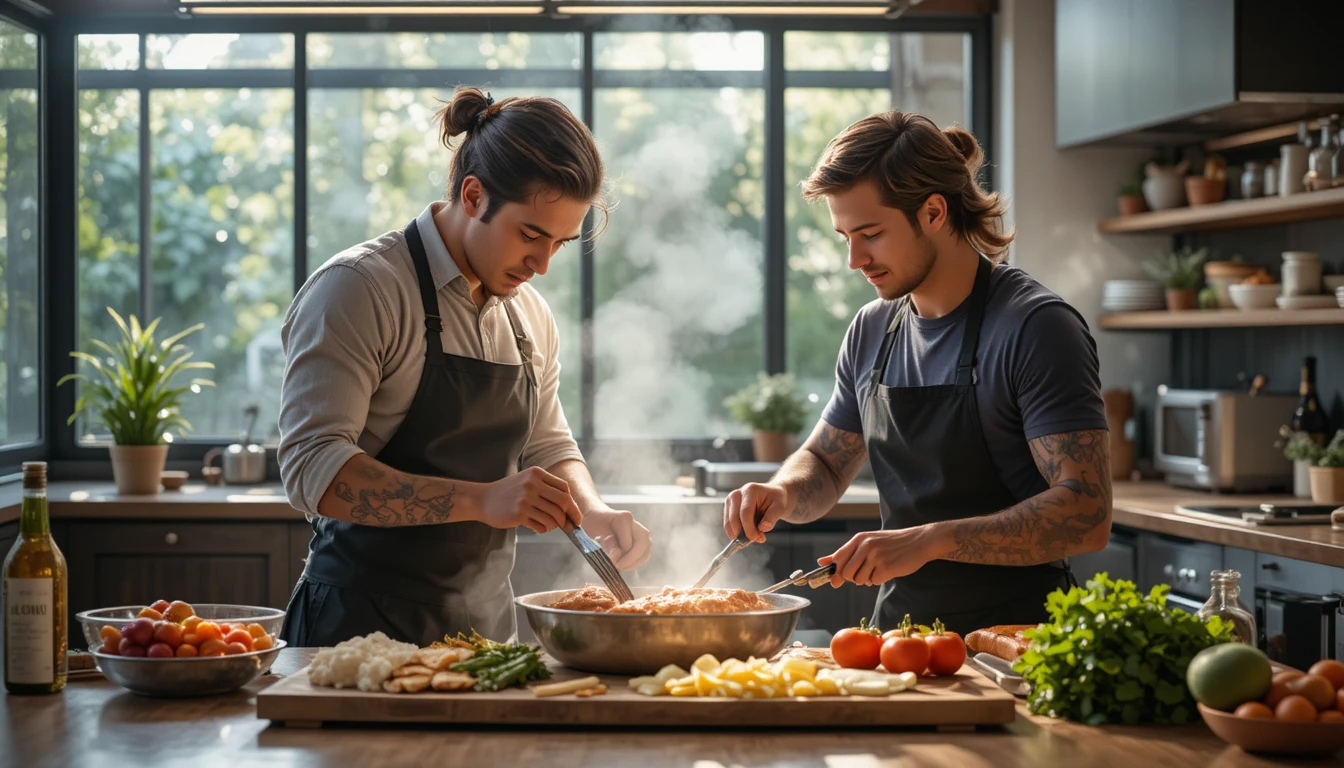
Cooking has never been more exciting—or more complicated—than it is right now. In 2025, the kitchen is no longer just a room with a stove. It’s a laboratory, a studio, a sustainability hub, a therapy space, and sometimes a stage for millions of strangers on the internet. What we cook, how we cook it, and why we cook it have all undergone a quiet revolution in the last decade. This isn’t your grandmother’s kitchen anymore, even when you’re making her recipes.
The pandemic forced half the planet to rediscover the act of putting knife to vegetable. Supply-chain chaos made us rethink what “fresh” really means. Climate anxiety turned every grocery run into a moral calculus. And smartphones turned every home cook into a potential content creator. The result? A golden age of cooking that feels both deeply personal and wildly communal.
Let me take you inside this new world.
The Death of the Recipe (As We Knew It)
For most of human history, recipes were sacred texts passed down like heirlooms. Today they are starting points, rough sketches, or sometimes punchlines. The modern cook doesn’t follow a recipe; they interrogate it.
A 28-year-old in Brooklyn might begin with a 1970s-era lasagna formula from her Italian nonna, swap the beef for mushrooms grown in a warehouse two subway stops away, bind it with cashew béchamel, finish it under a torch instead of an oven broiler, and film the whole thing vertically for 45 seconds of fame. The lasagna is still recognizable, but it has been remixed, upgraded, and personalized in ways that would make nonna gasp—then probably ask for seconds.
This isn’t disrespect. It’s evolution. We now cook with the confidence of people who have seen every possible variation of carbonara at 3 a.m. on their phone. We know the rules so well that we feel free to break them, not out of rebellion, but out of curiosity.
The Three Pillars of Modern Cooking
Everything happening in kitchens today rests on three intertwined ideas:
- Flavor without guilt
- Precision without fuss
- Creativity without waste
Flavor without guilt means we want food that explodes with taste but doesn’t leave us—or the planet—feeling terrible afterward. That’s why gochujang-glazed cauliflower wings can sit proudly next to actual chicken wings at a Super Bowl party, and nobody blinks.
Precision without fuss is the promise of the gadgets that now crowd our counters: the immersion circulator that turns a $9 supermarket steak into something you’d pay $60 for in a steakhouse, the air fryer that delivers French fries with 80% less oil and zero babysitting, the digital scale that finally convinces us baking is just edible chemistry.
Creativity without waste is the quiet moral engine driving everything else. We turn broccoli stalks into noodles, stale bread into ribollita, and whey from homemade yogurt into salad dressing. Nothing is trash until it’s actually composted.
The New Pantry
Walk into any serious home kitchen in 2025 and you’ll see the same quiet revolution on the shelves.
Go past the usual salt-pepper-olive-oil trinity and you’ll find:
- Miso in three colors
- Fermented chili pastes from three continents
- Nutritional yeast in the giant Costco bag
- Date syrup next to the maple
- Tinned fish treated like caviar
- Freeze-dried fruits that crunch like candy
- Aquafaba in a carton because nobody wants to whip chickpea water at midnight anymore
Spices are no longer bought in cute 2-ounce jars that expire before you use a teaspoon. People buy them by the pound online, store them in the freezer, and treat turmeric, smoked paprika, and Sichuan peppercorns like the flavor superpowers they are.
Tools That Changed Everything
Some inventions arrive with trumpets. Others slip into our lives so quietly we forget we ever lived without them.
The immersion circulator (sous-vide stick) is the quiet king. It looks like a laboratory toy, but it has democratized restaurant-level consistency. Chicken breasts emerge juicy at exactly 145 °F every single time. Tough cuts of beef turn buttery after 48 hours at 133 °F. Even vegetables taste impossibly vivid when cooked in their own juices inside a sealed bag.
The air fryer is the rowdy prince. It’s loud, it’s ugly, and it makes the best roast potatoes humanity has ever known. It gave an entire generation permission to love fried food again—without the lingering smell of oil in their hair.
High-powered blenders turned smoothies into meal replacements and cashews into silky Alfredo sauce. Instant-read thermometers ended the era of dry pork chops and bleeding chicken. Digital scales ended the “cup of packed brown sugar” arguments forever.
And then there are the quiet heroes: the microplane that turns garlic into paste and Parmesan into snow, the spider strainer that fishes dumplings out of boiling water without drama, the bench scraper that makes pie dough feel like playtime.
The Rise of the Hybrid Cook
Today’s best cooks are neither fully professional nor purely amateur. They are hybrids.
They might run a cloud kitchen out of their apartment three nights a week, selling mapo lasagna to strangers via an app. Or they might be software engineers by day who reverse-engineer croissants on weekends and post meticulous spreadsheets about hydration percentages. They understand flavor layering the way a DJ understands beats.
These hybrid cooks speak fluent umami. They know that acid plus fat equals delicious, that a dish without texture is boring, that Maillard browning is magic you can summon on command. They season fearlessly and taste obsessively.
The Aesthetics Arms Race
Let’s be honest: food has never looked better. Swipes and scrolls have trained our eyes to expect beauty on the plate. A simple bowl of fried rice now gets topped with a perfectly jammy egg, a snowstorm of scallions cut on the bias, chili oil that pools like abstract art, and toasted sesame seeds for sparkle.
Plating has become performance. The “crumb coat” technique once reserved for wedding cakes now appears on carrot cake loaf slices. A drizzle is never just a drizzle—it’s a Jackson Pollock painting executed with hot honey.
Even the humblest avocado toast gets upgraded: the fruit fanned with surgical precision, everything dusted with togarashi or dukkah, photographed in golden-hour light streaming through a window that someone definitely cleaned for this exact purpose.
The Return of Slow Food (On Fast Forward)
In the same breath that we celebrate 15-minute sheet-pan dinners, we’re also fermenting our own hot sauce for six months, curing our own bacon, and tending sourdough starters older than some relationships.
Slow food never died; it just got sexy again. There’s something deeply satisfying about watching cabbage transform into ruby-red sauerkraut or milk into tangy yogurt under your own roof. Fermentation is the original kitchen magic, and we’re all apprentices again.
The Protein Revolution
Meat isn’t going away, but it’s no longer the default. On any given night, the protein on your plate might be:
- Lentils cooked until they collapse into silk
- Mushrooms roasted until they taste like steak
- Jackfruit pulled into smoky strands
- A perfectly seared scallop the size of a hockey puck
- A burger that bleeds beet juice but tastes like childhood
The best modern cooks treat all proteins with equal respect. They know how to make tofu taste like something you’d fight over and how to make a ribeye sing with nothing more than fire and salt.
Meals as Identity
Cooking has become one of the primary ways we tell the world who we are.
Your feed reveals whether you’re cottagecore (sourdough, linen aprons, foraged mushrooms), chaotic (one-pot pastas, hot sauce on everything), wellness (adaptogenic lattes, green juices in mason jars), or nostalgic (grandma’s handwritten recipe cards photographed next to the finished dish).
We don’t just eat anymore. We curate.
The Future Is Already Cooking
Look a little further and the lines blur even more.
Your fridge will soon order oat milk before you realize you’re out. Your oven will recognize the lasagna you slid in and adjust time and temperature without being told. Your countertop herb garden will be lit by LEDs tuned to the exact spectrum basil craves.
3D printers will extrude custom pasta shapes designed by algorithms that know your carb tolerance and flavor preferences. Lab-grown chicken will hit mainstream grocery stores at price parity with the factory-farmed version. Vertical farms in abandoned warehouses will supply greens so fresh they still taste like sunshine.
But here’s the thing nobody talks about: the more technology enters the kitchen, the more we crave the opposite. We want the smell of browning butter, the sound of sizzling garlic, the feel of dough under our palms. We want the small failures and the unexpected triumphs. We want to be present.
A Love Letter to the Messy Middle
Modern cooking is messy. It’s a half-finished sourdough starter on the counter next to a takeout container of last night’s pad thai. It’s burning garlic at 11 p.m. because you were trying to get the video angle right. It’s realizing the recipe you’ve made fifty times tastes better when you forget the recipe entirely.
It’s the moment when your kid licks chili oil off their fingers and asks for more. When your partner walks in after a terrible day and the smell of caramelizing onions makes them cry in a good way. When you finally nail the omelet that has haunted you for years.
This is the real story of cooking in 2025: we have more tools, more knowledge, and more choices than any generation before us, and we’re using them to do something ancient. We’re feeding the people we love. We’re turning raw ingredients into comfort, into memory, into tiny daily miracles.
The kitchen remains the heart of the home—not because it’s perfect, but because it’s alive.
So tie on whatever apron makes you happy (vintage floral, plain black, or none at all), crank the music, and start chopping. Dinner isn’t just fuel anymore.
It’s the best part of the day.